Links

Showing posts with label citizen action. Show all posts

Thursday, September 17, 2015

Japanese citizens protesting as LDP/Komeito postpone Abe war bills until 8:50 a.m.; former Supreme Court justice warns the unpopular government that it is unlikely that the "unconstitutional" legislation would survive a legal challenge.


 (Photographer: Shinta Yabe)

Update: Sept. 18 - A citizens’ group is preparing a lawsuit to challenge the constitutionality of the national security laws that were enacted on Saturday to the Japanese government to send soldiers to fight in foreign wars. The suit now has 1,000 plaintiffs, according to Jiji via JT.

Update: Sept. 17 - The opposition parties submitted a no-confidence motion to the committee chair Yoshitada Konoike. Then Masahide ("Moustache") Sato took over the chairman's seat, after which opposition members made very long speeches to defend the motion. However, following the script, the committee voted against the motion.

Then as Konoike returned to his chairman's seat, dozens of opposition members rushed towards Konoike, appearing as if they were trying to stop the voting on the bills. The "scuffle" made worldwide newspaper headlines.

Some analysts are asking why the opposition parties stopped blocking the entrance, and allowed the September 17 committee meeting to take place, knowing their no-confidence motion was going to, of course, be defeated.

In the meantime, over 200 lawyers in Japan have issued a statement calling the "voting" among the wild scuffling at the special committee illegal and invalid.

Many are asking why opposition party members allowed this final assembly to happen after they said they would do everything to stop the bills.

Update: 5:10 a.m. - After opposition party members physically blocked the entrance to the special committee room on September 16, the special committee was delayed until 8:50 a.m.  The protest is still ongoing: http://iwj.co.jp/channels/main/channel.php?CN=4

The not-so-young politicians inside the building must be exhausted.

Update 2:05 a.m. - The Upper House Special Committee on the Abe war bills has not started yet as of 2 AM in Japan. LDP/Komeito is planning to get the committee to vote for the war bills tonight.

If it begins, it will be livestreamed here: http://www.webtv.sangiin.go.jp/webtv/index.php.

The protest outside of the Parliament is being livestreamed now at Iwakami Yasumi journal:
http://iwj.co.jp/channels/main/ .

Along with the majority of the Japanese mainstream citizenry, cultural figures such as Nobel Laureate Kenzaburo Oe and filmmaker Hayao Miyazaki, former prime ministers, the majority of Japanese lawyers, including former Supreme Court justices are protesting the bill as unconstitutional.

Former Japanese Supreme Court Justice Kunio Hamada on Abe War Bills called the bills "unconstitutional and "illegitimate."  Hamada warned that it is “extremely optimistic” for the Abe government to think that Supreme Court will not rule against the legislation if its constitutionality is challenged in court.

Monday, March 9, 2015

Tokyo fire bombing survivor: "Japan starting down road to war again" • Remembering the victims & survivors of the bombings of 67 Japanese & Okinawan cities from 1942 through 1945, & all bombing victims worldwide from 1911 to 2015

Katsumoto Saotome, a survivor of Great Tokyo Air Raids, wears a headband 
with words reading 'Kamikaze' on it, which he carried during an evacuation in the bombing.
(Photo: Reuters)

Reuters journalist Elaine Lies's article on the commemoration of the firebombing of Tokyo, "Tokyo fire bombing survivor fears Japan starting down road to war again," gives voice to one of the many Pacific War survivors warning us about the Japanese government's remilitarization.
Katsumoto Saotome was 12 the night he ran for his life through a sea of flames, jumping over smoldering railroad ties along a train track as U.S. B-29 bombers rained incendiary bombs down around him...

Now, as memories fade of how civilians suffered during World War Two - suffering Saotome blames on Japan's wartime leaders who thought of their citizens as "weeds" - the 82-year-old author fears Japan may be marching toward war again.

"I think we're turning backwards, down that road," said Saotome, citing Prime Minister Shinzo Abe's plans to change Japan's war-renouncing constitution, his more muscular security stance and a state secrets act passed last year.

"Everyone thinks at first that it's nothing, but more and more things accumulate, and then it's repression. I worry about what happens to women and children in this situation. We have to talk about it, maybe that will put a brake on things."

For Saotome and others of his age, the war stole their childhood. In school, before being conscripted to work in factories, they learned that the "kamikaze" divine wind would annihilate Japan's enemies. Should Japan lose, they would have to choose death over dishonor and kill themselves...

With more than 80 percent of Japanese, including Abe, born after the war, Saotome worries that reluctance to discuss painful issues may mean repeating past mistakes. Political apathy is also a worry, he says...

"Those of us who survived have a duty to become a voice for the voiceless," Saotome said. "If I'm quiet, it means I've accepted the situation. If we don't speak up, the past will be made to disappear."
As we remember the 70th anniversary of the March 9-10 all-night US firebombing of Tokyo, we also remember the largely forgotten firebombings of over 66 other cities in Japan and Okinawa. Historian Mark Selden has noted  that the scale of civilian casualties in Japanese cities "had no parallel in the history of bombing."

The US bombed Kobe, then the sixth largest city, with a population of one million, in 84 air raids, between April 18, 1942 to August 15, 1945. On July 24, 1945, a US B29 dropped 4 experimental "mock" atomic bombs ("pumpkin bombs") , with the same scale and weight as the "Little Boy" nuclear bomb dropped on Hiroshima, on Kobe. With a total death toll of more than 8,000, the death rate of civilians par square mile in Kobe was worse than that of Hiroshima and Tokyo.  Studio Ghibli's 1988 Grave of the Fireflies, an acclaimed animation about 2 child survivors of firebombings, was set in Kobe.

Before Tokyo and Kobe, on October 10, 1944,  US bombers began "softening up" assaults on Naha, the capital of Okinawa, destroying 80 to 90 percent  of the city. A thousand Okinawan civilians, twice as many as Japanese military personnel, were killed during the 10/10 raid. Colonel Yahara, the only surviving senior staff officer of Japan’s 32nd Army, wrote in The Battle for Okinawa (1972) that that the 10/10 destruction of Naha was “a sad foretaste of the tragedy to come” to Okinawa and mainland Japan. Yahara said Imperial Japan should have surrendered earlier to stem the loss of civilian life.  Most of the civilians who died during the Battle of Okinawa were killed by American bombardments.

The US bombings of Tokyo began in December 1944 and continued through August 13, 1945. March 9-10 was the worst of more than 60 air raids on Tokyo: over a hundred thousand civilians were killed and most of old capital was destroyed in one night.

In March 2007, 112 survivors and family members announced they would sue Japanese government for an apology and damages. The the plaintiffs, the oldest of whom was eighty-six and whose average age was seventy-four at the time, filed the suit with the Tokyo District Court in April. As expected, in 2013, the Japanese Supreme Court upheld the dismissal of the lawsuit.

However, the plaintiffs were able to tell their story, in their voices. Following this action, other lawsuits brought by Pacific War victims against the Japanese government, also raising the issue of war responsibility and accountability, followed, including actions by survivors of the Battle of Okinawa and the survivors of the Japanese fire bombings of Chongqing from 1938 to 1943 which killed 10,000 civilians.

Other Japanese cities the US bombed include Sendai (March 10 and July 19, 1945);  Osaka (March 13-14, 1945); Kagoshima (June 17, 1945); Moji, Nobeoka, Okayama and Sasebo (June 28); Takamatsu (July 4, 1945); Kofu (July 6, 1945); Gifu, Sakai, Sendai and Wakayama (July 9, 1945), Toyama (total destruction on Aug. 1-2, 1945).

According to the Shock and Awe Conference on Aerial Bombing held at the London School of Economics in November, 2011, the "development of aerial bombardment was more than just a military revolution.' [Aerial bombardment] "redrew the legal and moral boundaries between civilians and combatants, spread the theatre of war into new environments and expanded the battlefield, making cities into places of mass death and taking warfare into private, domestic spaces." This era began in 1911 when an Italian pilot, Guilio Cavotti, dropped the first bombs from a plane to the oasis of Tagiura outside Tripoli in north Africa during the Italian-Turkish War f ought between the Ottoman Empire and the Kingdom of Italy from September 29, 1911, to October 18, 1912 over the colonial control of Libya.

In the seventy years since the end of Pacific War, war memories and growing awareness of suffering of victims and survivors throughout the Asia-Pacific has continue to fuel peace building efforts by survivors and their descendants. Last June, 1,760,000 supporters of the Japanese Peace Constitution delivered a petition to Prime Minister Abe asking him not to change Article 9.

Background:

Film critic Roger Ebert - Grave of The Fireflies (video talk on Youtube)

"Tokyo fire bombing 70th anniversary: Survivors beg Japan to remember the forgotten 100,000" (David McNeill, The Independent, March 10, 2015)

"Saotome Katsumoto and the Firebombing of Tokyo: Introducing The Great Tokyo Air Raid" (Translation and Intro by Richard Sams, APJ, March 9, 2015)


"The Firebombing of Tokyo: Views from the Ground" (Brett Fisk and Cary Karakas, The Asia-Pacific Journal, Jan. 17, 2011)

"China and Japan at War: Suffering and Survival, 1937-1945" (Diana Lary, The Asia-Pacific Journal, Nov. 29, 2010)

"The Great Tokyo Air Raid and the Bombing of Civilians in World War II", The Asahi Shimbun, reposted at The Asia-Pacific Journal, March 11, 2010)


-JD

Sunday, September 21, 2014

Int. Day of Peace 2014 - Think PEACE, Act Peace, Spread PEACE - Imagine PEACE

Via Yoko Ono on the Int. Day of Peace 2014,
Surrender to PEACE:
Think PEACE, Act PEACE, Spread PEACE - IMAGINE PEACE
love, yoko
https://soundcloud.com/yokoono/sets/surrendertopeace
#SurrenderToPeace #PeaceOneDay


Tuesday, August 5, 2014

Peace Marchers arrive in Hiroshima: Call for a world free of nuclear & uranium weapons; Hiroshima Commemoration & Prayers for World Peace...

A very rare rainy August 6. Anniversary of the atomic bombing in Hiroshima. 
Every year, many people from all over the world gather 
to commemmorate that tragic day and vow for a world free from nuclear weapons. 


August 4, 2014.  Peace Marchers on the stage of the Opening Plenary of 
2014 World Conference Against A and H Bombs!

Congratulations to our friends at Peace March (sponsored by Gensuikyo, the Japan Council against A and H-Bombs), who have arrived in Hiroshima.

We join all in Hiroshima and  Nagasaki in remembering the people who died and suffered from the nuclear bombings. We also remember all victims of nuclear test bombings (Marshall Islands, US, China, Russia (Kazakhstan), India (Rajasthan), Polynesia...), and uranium weapons since Aug 6 and  Aug 9, 1945. And join their united call for a world free of nuclear weapons, and for peace.

More about Peace March:
The National Peace March is a campaign for a world free from nuclear weapons while walking across Japan literally while calling ‘No more Hiroshima! No more Nagasaki! No more nuclear weapons!’ It starts on May 6 from different prefectures in Japan and converging in Hiroshima on August 4.

The Peace March started on June of 1958 when a Buddhist monk walked from the atomic bomb site in the Hiroshima Peace Park all the way to the World Conference in Tokyo covering a distance of 1000 kilometers. As he passed through several prefectures, many people joined him each day and the delegation became very big when they reached Tokyo.

For more than half a century already, the Peace March has been done every year without a break. Rain or shine more than 1000,000 marchers pass through more than 70% of municipalities in all of Japan’s prefectures each year. Anyone with the wish for the abolition of nuclear weapons is very much welcome to join.

Konnichiwa! Heiwa koushin desu! Hello, this is the Peace March!
See the great photos and read the inspiring entries about everyday Okinawan and Japanese people working for peace and a world without nuclear weapons at Peace March Journals.


August 5, 2015. Hiroshima. 

Sunday, June 15, 2014

1,760,000 supporters of the Japanese Peace Constitution ask PM not to change Article 9

June 12, 2014 meeting in support of the Japanese Peace Constitution. (Photo and Story: NHK

The Peace Clause of the Japanese Constitution, Article 9, renounces “war as a sovereign right of the nation and the threat or use of force as a means of settling international disputes." This has been understood by the courts and all past governments of Japan to prohibit collective self-defense, or engagement in force, except for direct defense of Japan.

On June 12, Japanese Peace Constitution supporters gathered in Tokyo to proclaim their support of Article 9 and opposition to "collective self defense."  Organizers, which included Nobel Laureate Kenzaburo Oe, presented the signatures of 1,760,000 people to the prime minister and after the meeting, they marched to his official residence, and called on him not to change  the Constitution.

Just two days before, the Article 9 Association commemorated its tenth anniversary on June 10th, in Tokyo.  Since its formation, the group has generated more than 7,500 local Article 9 chapters across Japan.

The nine Japanese authors, scholars, and dignitaries who launched the Article 9 Association on June 10, 2004 included author Oe, constitutional scholar Yasuhiro Okudaira, philosopher Shunsuke Tsurumi, and writer Hisae Sawachi.  Four of these luminaries of Japan's prosperous postwar period are deceased: critic Shuichi Kato (1919-2008), peace activist and writer Makoto Oda (1932-2007) and Mutsuko Miki (1917-2012), widow of former Prime Minister Takeo Miki.

Kenzaburo Oe lecture at the June 10, 2014 anniversary gathering. 
(Photo: Takashi Togo, via Asahiwhich is providing outstanding reportage on Article 9)

The inaugural members formed the association in response to former PM Koizumi's deployment of Japanese SDF troops to Iraq and Kuwait after Washington's request for Japanese "boots on the ground" during its invasion of Iraq. Since the end of the Second World War, Japan has not been responsible for death of a single person in war. The Japanese Self Defense Forces (JSDF) engaged in "non-combat" support in Iraq and Kuwait from 2004 to 2008. On April 17, 2008, Nagoya High Court made a (non-binding) ruling that Koizumi's dispatch of troops to Iraq was unconstitutional.

(Photo of Article 9 Association lecture at Ariake Coliseum, Tokyo, 2005, via APJ)

In addition, Koizumi initiated an attempted revision of Article 9, the Peace Clause of the Japanese Constitution, which prohibits Japan from possessing military power other than than what is necessary to defend the nation from attack.  The former PM wanted to change the JSDF from a solely defensive force into a regular army which would be dispatched to support foreign wars, under the auspices of "collective defense," without constraint.

However, his efforts failed, and now PM Abe has picked up this baton.  In 2013, his administration attempted to amend Article 96 (that stipulates procedures for constitutional revisions) and proceed to revise Article 9 under accepted constitutional procedure.  Article 96 requires approval of two-thirds of the Diet; the Abe administration proposed revising it to lower the required votes to a simple majority in both houses to secure the call for a constitutional referendum. This effort failed.

At present the LDP and its coalition partner, New Komeito, has enough votes in the lower house but only 55 percent of the upper house, not enough to call a referendum under Article 96 which requires approval of two-thirds of the Diet.  Even if the administration did, the consensus of analysts is that a referendum would fail.

Therefore the administration is trying to push through a "reinterpretation" of Article 9 by the Cabinet Legislation Bureau, which conventionally provides oversight on bills, orders and treaties and provides legal opinions to the PM.  In the past, LDP governments, advised by the Cabinet Legislation Bureau, have asserted that "collective self defense" exceeds the "no-war" limits of Article 9, therefore, Japan cannot engage in collective self defense.  Not only does the current administration's "reinterpretation" fall outside of the range of possible reasonable interpretations of Article 9, to the point of violating both the spirit and the letter of the no-war cause, such a move would set a precedent for the executive branch to bypass the deliberative participatory process of amending the constitution that requires approval by Japanese citizens in a special referendum under Article 96.

For many advocates of democratic process and rule of law, the central issue is not the (albeit critical) debate over whether Article 9 should be amended to allow "collective defense," but instead the attempt by Japan's executive branch to bypass these constitutionally mandated procedures to change the constitution unilaterally.

The two political parties in control of the government, the Liberal Democratic Party (LDP), and New Komeito (which is affiliated with Soka Gakkai, a mass Buddhist organization),  do not represent a majority of the Japanese citizenry.  According to Shingetsu News (yesterday), 27.2 percent of the country support the LDP and 3.3 percent back New Komeito. That's a total of only 30.5 percent of the population.

An Asahi poll found that only 29 percent (around the percentage of voters that support the Liberal Democratic Party (LDP), Abe's political party) approve of Japan's taking up collective self defense. But even less, only 18 percent, support the administration's improvised method of constitutional change.  The poll also found that 67 percent of Japanese voters consider the move for reinterpretation as "improper."

Moreover, as with internal dissent in 2004 over sending JSDF to Iraq, the LDP in 2014 does not unanimously back PM Abe's call for constitutional reinterpretation. Former LDP Secretary-General Koga Makoto, who lost his father to the Pacific War, has publicly criticized this plan. Similarly to several Nobel Peace laureates, Koga considers Article 9 a "world heritage."

Concerned about their nation, high profile Japanese figures are increasingly speaking out on behalf of Article 9, the peace clause. On the eve of his birthday in December of last year, Emperor Akihito (tutored by an American Quaker during his youth) defended Article 9. Then, on the eve of his birthday in February of this year, Crown Prince Naruhito attributed Japan's peace and prosperity to the pacifist Constitution.

A-bomb survivors in Nagasaki are now demanding that explicit support for Article 9 to be included in this year's Peace Declaration, according to the Asahi this morning.

Those familiar with Japanese history know that this latest chapter of a cultural and political conflict between Japanese militarists and pacifists has numerous antecedents going back to the prewar and the early postwar period. Kijuro Shidehara, an advocate of pacifism in Japan before and after the war, helped prepare the Kellogg-Briand Pact (General Treaty for Renunciation of War as an Instrument of National Policy) of 1928, of which Japan was a signatory (prewar and wartime militarists ignored the treaty). And, as Japan's second postwar prime minister, Shidehara conferred with the US Occupation, especially General MacArthur, as the postwar constitution was drafted.  (MacArthur attributed Article 9 to Shidehara, although some scholars dispute this.)

Since its promulgation in 1946, Article 9 has been frequently undermined, but the Japanese people have repeatedly rebuffed attempts at constitutional revision. For this, the Peace Clause has ensured that they have not been "visited with the horror of war through the action of government" for seventy years. The late scholar John M. Maki asserted that pacifism, popular sovereignty, and the guarantee of fundamental human rights are foundation of the Japanese constitutional system, and that the "people of Japan made the Constitution their own, and thus carried to completion one of the most successful and significant political transformations of the twentieth century."

At this point, Japanese civil society groups and elected officials who honor accountability to their constituents must consider and initiate countervailing actions that will challenge the executive branch's unprecedented unconstitutional overreach.


(This post is an expanded version of a tribute to the Article 9 Association posted June 10.)

---
More Info:


"LDP’s Gifu chapter blasts Abe’s rush to reinterpret Constitution," Asahi, June 16, 2014.

Komori Yoichi, "Japan’s Article 9 and Economic Justice: The Work of Shinagawa Masaji" by , (Intro by Norma Field), published this week at The Asia-Pacific Journal: Japan Focus:  
On June 10, 2014, the Article 9 Association marks its tenth anniversary, more than ever embattled and determined. As illustrated by Alexis Dudden’s recent article on this site, “The Nomination of Article 9 of Japan’s Constitution for a Nobel Peace Prize,” business people figure in the broad swath of “Japanese people who conserve Article 9” recognized as worthy of consideration for the Peace Prize by the Norwegian Nobel Committee. Shinagawa Masaji, the subject of this memorial tribute by prominent modern literature scholar and executive secretary of the Article 9 Association Komori Yoichi, was surely the dean of progressive financial leaders of the postwar era...
"A Nobel Peace Prize nomination (with Henoko connection) for the Japanese and Okinawan people who support Article 9, the Japanese Constitution's Peace Clause, " TTT, April 24, 2014.

Shunsuke Hirose, "Shinzo Abe’s Biggest Enemy: the LDP: Internal party discord shows the narrative of Japan’s rightward shift under Abe is not as simple as it might appear," The Diplomat, April 14, 2014.

Mizuho Fukushima (SDP) and Taro Yamamoto (Independent): "Opposition lawmakers state their case against the administration's plan (Exercise of Collective Self Defense)," Foreign Correspondents Club of Japan YouTube Channel, March 27, 2014.

Colin P.A. Jones, "Japan’s Constitution: never amended but all too often undermined," The Japan Times, March 26, 2014.

"Kenzaburo Oe, Jakucho Setouchi, Masahide Ota found “1000-member committee to prevent Japan from entering wars" (Rally @Hibiya Park, March 20, 2014)," TTT, March 18, 2014.

"Mr. Abe’s constitutional runaround," The Japan Times, August 9, 2013.

"Makoto Koga: Election win not mandate for constitutional revision," The Asahi, July 22, 2013.

Lawrence Repeta, "Japan’s Democracy at Risk – The LDP’s Ten Most Dangerous Proposals for Constitutional Change,The Asia-Pacific Journal: Japan Focus, July 15, 2013.

John Junkerman, "The Global Article 9 Conference: Toward the Abolition of War," The Asia-Pacific Journal: Japan Focus, May 25,  2008.

Yoshikazu Sakamoto, "The Postwar and the Japanese Constitution: Beyond Constitutional Dilemmas," The Asia-Pacific Journal: Japan Focus, November 10, 2005.

John M. Maki, The Constitution of Japan: Pacifism, Popular Sovereignty, and Fundamental Human Rights," Law and Contemporary Problems: Vol. 43: No. 1 (1990).

Tuesday, May 27, 2014

Save the Dugong Campaign Center's photos of "rain-forest"-like sea grasses, clown fish, & blue coral at Oura Bay, Okinawa


Save the Dugong Campaign Center's beautiful photos of Oura Bay (also called Sea of Henoko)  reflect findings a few years ago by Tokyo marine science researchers of a "rain-forest"-like variety of 182 different species of sea grasses and marine plants, clown fish, and exquisite blue coral.

See more photos here: http://www.sdcc.jp/nobase/no-base.html. Included: great photos of the mangrove wetlands and the amazing elder tent city (grandmothers and grandfathers who survived the Battle of Okinawa as children) who became eco-activists to save the natural environment of Henoko for their grandchildren.

SDCC says all are welcome to share these photos, to help spread the word on the precious biodiversity of Oura Bay.


Tuesday, March 18, 2014

Kenzaburo Oe, Jakucho Setouchi, Masahide Ota found “1000-member committee to prevent Japan from entering wars" (Rally @Hibiya Park, March 20, 2014)


ARTICLE 9: Aspiring sincerely to an international peace based on order, the Japanese people forever renounce war as a sovereign right of the nation and the threat or use of force as means of settling international disputes. In order to accomplish the aim of the preceding paragraph, land, sea and air forces, as well as other war potential, will never be maintained. The right of belligerency of the state will not be recognized.
The Abe administration wants to reinterpret and revise the Japanese Peace Constitution to send the Japanese Self Defense Forces (JSDF) fight on behalf of other nations under the rubric of "collective defense."

This is not a new political struggle.  Okinawans have been on the front lines of the remilitarization of their prefecture since 1945, when the American military took over former Japanese bases and began a decade-long series of seizures (by force) of Okinawan farms and homes, for further base expansion. The ink was barely dry on Japan's pacifist Constitution, when in the early 1950's, Allen Dulles agitated for full Japanese remilitarization. The then Secretary of State wanted a Japanese military of between 300,000 and 350,000 men, to assist in US wars in Asia. Richard Nixon, as vice-president, supported Dulles, stating that Article 9 was a "mistake" while visiting Tokyo in 1953.

However, Dulles and other Cold War hawks were repeatedly thwarted by the majority of Japanese citizens who resisted the call to war (albeit during the sacrifice of Okinawa, which endured direct US military rule until 1972, serving as a major US weapons testing and combat training site during the wars in Korea and Vietnam).  Historian John Dower attributes Japan's pacifist policy to the democratically expressed will of the people, in John Junkerman's 2006 documentary film, Japan's Peace Constitution:
People who remembered what war was really like said, "We can't do this again. We have to cherish these ideals." The government, however, was saying, "Oh, we've got to go along with America." And so you have this split in Japan...
In the face of the Japanese citizenry's overwhelming support of Article 9, Japanese postwar governments fell into a gradual, barely noticeable process of chipping away at the prohibitions of Article 9 and growing JSDF capability. According to the Stockholm International Peace Research Institute, Japan now ranks in the top ten countries in the world in military expenditure.

This slow pace shifted when neo-cons wielded control of US foreign policy during the Bush-Koizumi years.  Not only did they instigate the invasion of Iraq, but they also resurrected Cold War tensions in Asia, after a decade of thawing relations between China and Japan. Former PM Koizumi bowed to American neo-con demands to hasten Japan's remilitarization, at the same time he began his controversial visits to Yasukuni Shrine, reopening wartime wounds. During the Japanese neo-con's tenure, he worked to erode the remaining vestiges of Article 9, going as far as to send 1,100 members of the Japan Self Defense Force to Iraq (ostensibly for non-combat support), even though Iraq has never posed a threat to Japan.

Perhaps because of ongoing remorse for the millions of people killed during the Second World War, and perhaps because of vivid memories of fire bombings of all of Japan's major cities, the Battle of Okinawa, and the nuclear bombings of Hiroshima and Nagasaki, the Japanese and Okinawan mainstream challenged Koizumi's support of the US invasion of Iraq, similarly to the ongoing challenge of the Abe administration's assaults on what's left of Article 9, the only thing that keeps Japan from falling into the abyss that is war.

Concerned about their nation, high profile Japanese figures are increasingly speaking out on behalf of Article 9, the peace clause. On the eve of his birthday in December, Emperor Akihito (tutored by an American Quaker during his youth) defended Article 9. Then, on the eve of his birthday in February, Crown Prince Naruhito attributed Japan's peace and prosperity to the pacifist Constitution.

And this month, The Asahi, the Japan Daily Press and the Ryukyu Shimpo (one of Okinawa's two major daily newspapers) reported on the establishment of a “1000-member committee to prevent Japan from entering wars." Founding members include Nobel Laureate Kenzaburo Oe, Buddhist nun Jakucho Setouchi, and former Okinawa governor Mashide Ota.

The Asahi:
"We have to stop the move to allow the Cabinet to undermine Article 9 simply by reinterpreting the Constitution," said constitutional scholar Yasuhiro Okudaira, professor emeritus at the University of Tokyo and one of the 16 founding members of the group...

"While Japan should contribute to world peace, it is becoming a country that can export arms and enter war," said writer Keiko Ochiai, another founding member.

Tetsumi Takara, a professor of constitutional law at the University of the Ryukyus in Okinawa Prefecture, commented, “For the Okinawan people who have experienced war, it looks as if war is imminent.”
JDP:
Distinguished writers, scholars and other academics in Japan have joined forces to challenge the government’s move to reinterpret the country’s Constitution. A group aiming to gather one thousand members, calling themselves the “1,000-member committee to prevent Japan from entering war..."

...Writer Makoto Sataka also reminded, “If the right to collective self-defense is granted, Japan would cross the line of ‘self-defense’ and also defend other countries, obliging Japan to engage in a war led by the United States.”

...Currently, 83 people have already signed the group’s appeal, including writer Jiro Akagawa, songwriter Reiko Yukawa and actor Bunta Sugawara.
Ryukyu Shimpo:
In an attempt to prevent the reinterpreting of Japan’s Constitution by the Abe administration to be able to defend allies who come under attack, on March 4, distinguished intellectuals set up a group called the  They proclaimed, “We will step up our criticism of and protest action against the government which has been trying to change Japan to enable it to enter wars. They treat Article 9 as a dead letter and approve the use of the right of collective self-defense.”

Founders of the committee are cultural workers and intellectuals such as writer Kenzaburo Oe, Buddhist nun Jakucho Setouchi and play writer So Kuramoto. Tetsumi Takara, a professor of graduate school of law of the University of the Ryukyus took part in the press conference. Former Okinawa Governor Masahide Ota also joined as a founding member.

In their announcement, they referred to Okinawa, which hosts U.S. military bases, as being closely related to the issue of collective self-defense. They criticized the government, saying, “Without lessoning Okinawa’s burden of hosting the bases, they are forcing through building a new base in the Henoko district of Nago."

The committee will hold a rally on March 20 at the Hibiya Open-Air Concert Hall in Tokyo. In addition, they will work to collect signatures and set up committees across the country."
Background:

John W. Dower, "Asia and the Nixon Doctrine: The New Face of Empire, Open Secret: The Kissinger-Nixon Doctrine in Asia, Eds. Virginia Brodine and Mark Selden, 1972. 

Japan's Peace Constitution (Transcript), Director: John Junkerman, 2006.

More Info: 

Article 9 Association 

Global Article 9 Campaign

Colin P.A. Jones, "Japan’s Constitution: never amended but all too often undermined," The Japan Times, March 26, 2014. 

Lawrence Repeta, "Japan’s Democracy at Risk – The LDP’s Ten Most Dangerous Proposals for Constitutional Change,The Asia-Pacific Journal: Japan Focus, July 15, 2013.

John Junkerman, "The Global Article 9 Conference: Toward the Abolition of War," The Asia-Pacific Journal: Japan Focus, May 25,  2008.

Yoshikazu Sakamoto, "The Postwar and the Japanese Constitution: Beyond Constitutional Dilemmas," The Asia-Pacific Journal: Japan Focus, November 10, 2005.

Tuesday, December 17, 2013

WAR IS OVER (If You Want It)


Yoko Ono's holiday message for decades, available for download in 100 languages at http://imaginepeace.com/warisover/.
Dear Friends

Download, print & display these posters
in your window, school, workplace, car
and  elsewhere over the holiday season.

Send them as postcards to your friends.

We say it in so many ways, but we are one.

I love you!
yoko

Tuesday, December 10, 2013

Hundreds of Japanese citizens are engaged in a crowd-sourced effort to measure Fukushima radiation

Nice article at Yes! Magazine by Erika Lundahl about Safecast, the citizen radiation monitoring in Japan: Measuring Fukushima's Impact: How Geeks and Hackers Got Geiger Counters to the Masses: Hundreds of ordinary people are contributing to a crowd-sourced effort to measure Fukushima's impact:
Hundreds of ordinary people are contributing to a crowd-sourced effort to collect data on radiation levels for scientists and ordinary citizens to use and interpret. The project was launched by SafeCast, an organization formed in the wake of the 2011 earthquake to supplement the sparse data provided by the Japanese government on radiation travel patterns.

"We were completely appalled that there was no way to get this data," SafeCast co-founder Sean Bonner said, "and that people couldn't see what was happening to their environment."

Through online collaboration with scientists and programmers, Bonner and his collaborators engineered an easily reproducible and highly accurate GPS-enabled Geiger counter, which they call the bGeigie. They distributed the first batch of 100 to volunteers who crisscrossed Japan in cars, delivery vehicles, and on foot, collecting data on radiation unmatched in scope and accuracy. To make the information from the bGeigies widely available, SafeCast publishes copyright-free maps of the readings that come in from the devices.

Sunday, November 17, 2013

"War is Over! (If You Want It): Yoko Ono" • Sydney MCA • Nov. 15, 2013 - Feb. 23, 2014


"WAR IS OVER! (IF YOU WANT IT)" opened Nov. 15, 2013 at the Museum of Contemporary Art in Sydney.  This is the first major survey in Australia of legendary artist, musician and peace activist Yoko Ono. "The exhibition encompasses five decades of practice in diverse media including eight participatory works. Themes include loss, conflict, humanity and the desire for world peace."  Ono designed the interactive parts of the exhibition to encourage collaboration, linked to a central theme of world peace.

Curated by MCA Chief Curator Rachel Kent, the title comes from a text by Ono and her late husband John Lennon that first appeared in 1969—in the middle of the Vietnam War—across public billboards in twelve cities worldwide, including Tokyo, Hong Kong, Toronto, Berlin, Paris, New York, and London.

While other visual artists have also engaged in peace art and activism, Ono is perhaps the most renowned peace artist of our time.  How did the impetus for her highly focused creative work originate?

Ono has explained that a childhood experience of the firebombing of Tokyo awakened her understanding of the human costs of military violence, fueling her peace art and activism for five decades.

Her father was an international banker and moved his family between the United States and Japan, so, as a child, Ono developed positive attachments to both countries. When the Pacific War broke out, she was eight-years-old, living in Tokyo.  She and her family survived (by taking shelter in a basement in their Azabu home) the firebombings of Tokyo, including the massive March 9-10, 1945 raid—the most destructive bombing raid in world history. At minimum, the napalm-fueled bombings destroyed 16 square miles (41 km2) of the city and killed 100,000 people.

In a 2007 interview with Amy Goodman:
I remember, when I was a little girl, a young — you know, when I was very young, one day I had high fever because of just a cold. You know, I had a cold.

And so, my family all went down into the basement to make sure that, you know, they’re alright. It’s a kind of shelter that they created in the garden actually. But I couldn’t go.

And I was just sort of in my bed, and I saw that all the houses next to us and all the places around me were just all fire. I go, "Oh." But, you know, when you’re young, and that’s the only reality you’re working through, you don’t really get totally scared or anything. You know, you’re just looking at it like an objective film or something like that. "Oh, this is what’s happening," you know?

And because of that memory of what I went through in the Second World War, I think that I really — it embedded in me how terrible it is to go through war.
To those who charge that she is "optimistic" or "naive," Ono points out that she is a simply a resilient pragmatist who cares about life and our planet—and does what she can do—which includes encouraging others to do what they can do to support peace building at multiple levels:
Well, you know, most people say, "Oh, you’re so optimistic. I mean, what’s wrong with you?" I’m not really that optimistic.

I am trying to make us survive. And in the course of survival, we don’t have the luxury to be negative. That’s a luxury that we can’t afford.

 And we just have to do what we can do. And I think that instead of getting so upset with some people, you know, or some countries which are doing this, doing that — "How dare they," whatever — I think we should just do what we can do.
 In a Reuters article about this current exhibition, she compares 1969 with 2013:
When John and I stood up, very few people were activists. Now I think 90 percent of the world is activists. If you're not an activist, you'd be considered a nerd maybe.

 (Image: Colin Davidson, The Guardian)

"Pieces of Sky"—WW II German helmets with blue jigsaw pieces inside.
Visitors are told, "Take a piece of sky. Know that we are all part of each other."


"Play It By Trust"/"White Chess Set"
(Photo: Iain MacMillan,© 1966 YOKO ONO)

Shinya Watanabe:"Through her simple alteration of the chessboard
 (a war strategy game), the artist made it extremely hard for the chess players to 
 fight each other, and this creates new relationships between the opponents."


Friday, November 15, 2013

Beautiful Energy - 1st Anniversary Celebration - Tokyo - Nov. 30, 2013

(Photo: Beautiful Energy)

Via Jacinta Hin and Natsu no Color of Tokyo-based Beautiful Energy/The Stand for a Nuclear-Free World.
Beautiful Energy is... born out of the weekly Friday anti-nuclear demonstrations in Tokyo in front of and around the prime minister's residence and Parliament. Through inspired, peaceful action we stand for a nuclear-free world that thrives on renewable energy.

Our current, ongoing project is Candles for Peace. Every Friday, from 6-8pm Japan time, we gather in front of parliament in kokkai gijido, joining the weekly anti-nuclear protest, and create a beautiful display of candlelight to symbolize our intentions...
This group of visionary citizen activists in Tokyo radiate positive (and beautiful) emotional, ethical energy and holistic vision.  They're engaged in outreach and support for Fukushima nuclear refugees, (including bringing hot meals to elder refugees living in a shelter).  Sharing their kind of healing, constructive worldview is a first step in our collective transition from toxic to nontoxic, renewable energy production and use.
In November it will be one year since we lighted our Beautiful Energy candles for the first time. Time for a little celebration!

You are invited to our anniversary party in Tokyo on November 30. Join us for an intimate evening with live music, delicious graceful vegan foods and of course candles!

Date: November 30 (Saturday), from 19.00 – 22.30pm
Place: Bar GariGari (Tokyo, Setagaya-ku, Daizawa 2-45-9, .. Building B1 /

http://tabelog.com/tokyo/A1318/A131801/13126176/dtlmap/ / opposite Ikenoue Station, Inokashira-line (2 stops from Shibuya)

Charge: 2,000 yen (inclusive vegan buffet foods, music charge and charity donation).

* Vegan foods provided by our Friday neighbors Yuko Ogura and Yayoi Ito of Guerilla Café

* Drinks are not included. Please order at least one drink at the bar

* 500 yen will go to Share Your Christmas (SYC). SYC collects and brings Christmas presents from around the world to people in Tohoku affected by the 3/11 earthquake, tsunami and nuclear disaster (https://www.facebook.com/shareyourchristmaswithtohoku)

Please bring your own chopsticks, so we may reduce waste and spread eco-energy!

19:00 Start

19:20 Anniversary Speech

19:30 Special Message from people from all over the world♪

19:45 Music time: nuclear-free world songs by Natsu, Chris and other Beautiful Energizers! (details to follow)

20:30 Enjoy conversation with each other!

22:30 End

Kindly let us know no later than November 20 if you plan to attend (and sooner if you can).

Sunday, October 27, 2013

Japan as Number One in Radiation Education: Lessons for the World

"Children taught radiation studies: Nuke education now compulsory subject in schools in Fukushima" 
(Story and Photo: Mizuho Aoki, JT, March 24, 2012)

Today Martin Frid at Kurashi reminds us that Japan is now number one in the world in radiation education.

The Japanese educational system should have been number one in radiation education starting in 1946, when Japan's grassroots nuclear-free movement began, amidst US Occupation censorship of news about the consequences of radiation fallout from the nuclear bombings of Hiroshima and Nagasaki.

When the US Occupation ended in 1952, the Japanese nuclear-free movement gathered more steam, especially after the March 1954 irradiation of the fishing boat, "The Lucky Dragon #5," by fallout from the US hydrogen test bombing of the island of Bikini in the Marshall Islands.  Outrage increased after people learned irradiated tuna was sold and eaten in Japan.  The explosion provided the initial scenes of the film quasi-sci-fi film Godzilla which premiered eight months after the bombing.

With the raw hindsight of 3/11, it's astonishing to realize that Washington was able to explode 105 nuclear test bombs in the Pacific from 1946 to 1962, vaporizing entire islands, irradiating the Asia-Pacific region, and, simultaneously, in partnership with the Japanese postwar political establishment, was able to overcome the nascent Japanese nuclear-free protest movement, and successfully promote the idea of nuclear energy production as "safe." How did nuclear industry promoters subdue awareness and concern in Japan about the dangers of nuclear radiation?

Yuki Tanaka and Peter Kuznick detail how Washington's "Atoms for Peace" program worked to counter the widespread perception of the dangers of nuclear radiation in Japan.  This program was especially calculated to obscure the memory of the nuclear bombings of Hiroshima and Nagasaki. Atomic Energy Commissioner Thomas Murray and a US congressman even proposed that Japan's first nuclear energy plant be built in Hiroshima to push the images of radioactive carnage out of the Japanese public mind.  The Washington Post seconded their idea:
Many Americans are now aware … that the dropping of the atomic bombs on Japan was not necessary. … How better to make a contribution to amends than by offering Japan the means for the peaceful utilization of atomic energy. How better, indeed, to dispel the impression in Asia that the United States regards Orientals merely as nuclear cannon fodder!"
Japan's first nuclear power plant was not built in Hiroshima, of course, but The Daily Yomiuri's traveling exhibition "The Peaceful Use of Nuclear Energy” did make a stop in the atom-bombed city in 1958, incredibly with the support of the Hiroshima establishment:
Although in other cities the exhibition was sponsored exclusively by the Yomiuri with the assistance of the U.S. Information Service, in Hiroshima co-sponsors also included the Hiroshima City Council, Hiroshima Prefectural Government, Hiroshima University, and the Chugoku Newspaper... All praised the promotion and application of this new powerful energy.  By contrast, many A-bomb survivors were skeptical and cautious about this non-military application of nuclear power, claiming that there was still no solution to the problem of managing radioactive materials produced by operating nuclear power reactors.
The newly completed A-bomb Museum building in Hiroshima was even used as the pavilion for the  exhibition:
Thus, in the same building, exhibits related to the devastation caused by the atomic bombing were displayed together with various dream-like applications of nuclear energy.  Such things as nuclear powered planes, ships and trains, as well as medical, agricultural and industrial uses of radioactive materials were displayed.
Hundreds of thousands of people throughout Japan, including 155,000 in Kyoto, visited the exhibition when it stopped in their cities. However, nuclear-free activists, including many Hibakusha, and some media, notably The Mainichi, countered:
First, baptism with radioactive rain, then a surge of shrewd commercialism in the guise of 'atoms for peace' from abroad. 
Nuclear power propaganda efforts continued, and the nuclear industry made inroads by the 1960's. In 1966, Tokai, Japan's first nuclear power plant began operating, and in the 1970's, nuclear plants were constructed throughout the archipelago.  The nuclear reactors at Fukushima Daiichi are from this era.

Even throughout the heyday of nuclear boosterism, the Japanese nuclear-free movement stayed strong, with notable local successes. The movement strengthened after the Chernobyl meltdown and during the 1990's, a period of numerous nuclear accidents in Japan.

Local communities, Japanese civil society and nuclear-free activists stopped the construction of nuclear power plants, notably in Iwaishima, where the Chugoku Electric Power Company has attempted to build a nuclear power plant in the Inland Sea National Park. In 2006, musician Ryuichi Sakamoto and  Greenpeace launched an international awareness project protesting the Rokkasho [plutonium] Reprocessing Plant under a campaign called "Wings of Peace – No more Hiroshima Nagasaki."  Japanese nuclear-free activists warned of the risks at Fukushima Daiichi long before 3/11.


Gavan McCormack says it's no longer possible to kick Japan's radioactive cans down the road in "Japan as a Plutonium Superpower."  He suggests a way forward for Japan (and the world) in "Hubris Punished: Japan as Nuclear State."  It's the same choice that Japanese nuclear-free,  carbon-free, renewable energy, energy conservation, organic, and Slow Life advocates have been calling for and working towards: turning the ongoing disaster into a time of change towards a sustainable future.
Successive generations of Japan’s bureaucratic, political, corporate, and media elite have insisted that Japan pursue the nuclear power path at all costs. In retrospect, they drove the country forward, as the elite of the Kwantung Army drove it in the pre-war era, towards disaster, ignoring, coopting, or crushing all opposition. Only now, facing the costs—human, environmental and economic—the long-postponed debate opens...

What is called for, in short, is the reversal of a half century of core national policies and the switch to a renewable energy system beyond carbon and uranium.  Such a strategic decision, turning the present disaster into the opportunity to confront the key challenge of contemporary civilization, amounts to a revolutionary agenda, one only possible under the pressure of a mobilized and determined national citizenry.

At this crucial juncture, how Japan goes, the world is likely follow. The challenge is fundamentally political: can Japan’s civil society accomplish the sovereignty guaranteed it under the constitution and wrest control over the levers of state from the irresponsible bureaucratic and political forces that have driven it into the present crisis?
---

Background:

"Children taught radiation studies: Nuke education now compulsory subject in schools in Fukushima" (Mizuho Aoki, JT, March 24, 2012)

Anti-Nuke Who's Who (Citizens' Nuclear Information Center, Tokyo)

"The Kaminoseki Nuclear Power Plant: Community Conflicts and the Future of Japan’s Rural Periphery" (Tomomi Yamaguchi, The Asia-Pacific Journal, Oct. 10, 2011)

"Japan, the Atomic Bomb, and the “Peaceful Uses of Nuclear Power” (Yuki Tanaka and Peter Kuznick, The Asia-Pacific Journal, May 2, 2011)

"Hubris Punished: Japan as Nuclear State 驕れる者は久しからず−−核国家としての日本" (Gavan McCormack, The Asia-Pacific Journal, April 18, 2011)

Japan's Once-Powerful Nuclear Industry is Under Siege" (Caroline Fraser, Environment 360, March 17, 2011)

Japan as a Plutonium Superpower" (Gavan McCormack, The Asia-Pacific Journal, Dec. 9, 2007)

"The Power of Protest: The campaign against nuclear weapons was not simply an ideological movement; it was a potent political force"  (Lawrence Wittner,  Bulletin of Atomic Scientists, July-August 2004)

Wednesday, October 16, 2013

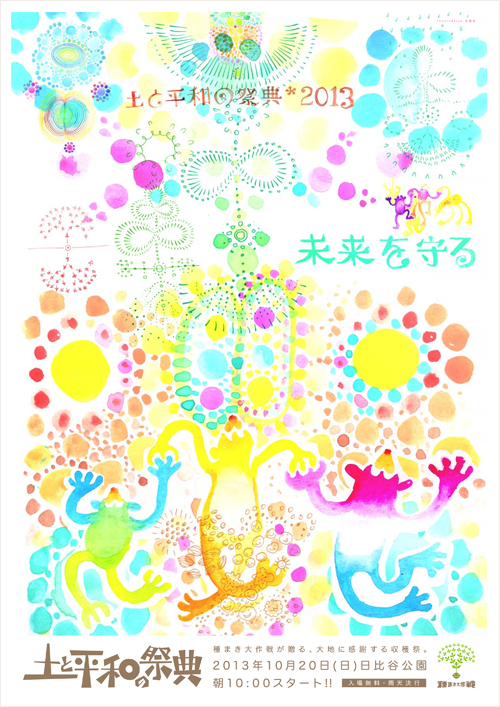
World Food Sovereignty Day • Soil and Peace Festival @Hibiya Park, Tokyo - Oct. 20, 2013


soil and peace festival 2013

Today is the international family farmer movement Via Campesina's World Food Sovereignty Day; and this weekend, Japanese organic family farmers and their supporters will join in a celebration of the best of visionary Japanese (organic, recycling, nuclear-free, GMO-free, fair-trade, Slow Life, satoyama, Tohoku-supporting) culture.

Via the Consumers Union of Japan:
There will be a Soil and Peace Festival in Hibiya Park, Tokyo, on Sunday October 20, 2013. Starting at 10:00 hundreds of farmers and activists and artists will hold a great event until the evening.

A great opportunity to meet your favourite NGOs and learn more about organic food, anti-nuclear campaigns and the future of Japan. Look forward to lots of inspiration! Music by Kato Tokiko and many others throughout the day, starting with a taiko performance by Gocco.

Website with more info (J) here.

Monday, October 14, 2013

40,000 rally in Tokyo for a nuclear-free and war-free Japan (and World); Global Article 9 gathering in Osaka

(Via Jacinta Hin and Beautiful Energy)

Good Morning world! Today is NO NUKES DAY in Tokyo, the day of the big demonstration. Many people from all over Japan coming together in protest to ask for a nuclear-free Japan.

If you're in Tokyo, JOIN, be seen, be heard, make a difference!

If you cannot join in person, be with all of us in spirit and heart.

To get you in the mood, we have the perfect song for you. Talented musician Natsu of our Beautiful Energy core group, has created a NO NUKES version of a famous pop song. Listen to her beautiful voice and soulful NO NUKES, BABY and be connected with us today!
At the end of September, nuclear-free supporters held two rallies after TEPCO asked for permission to restart TEPCO on Friday asked Japan's nuclear watchdog for permission to restart its Kashiwazaki-Kariwa nuclear power plant in Niigata Prefecture.

Since September 15, all of Japan's nuclear plants have been in shut-down for maintenance.
---

Also over the weekend, the Global Article Nine Campaign held 
its second international conference  supporting a (nuclear-free) world without war:  

Thursday, October 3, 2013

Global Article 9 Conference in Osaka - October 14, 2013


Via Global Article 9
Invitation to the Global Article 9 Conference in Kansai 2013

Article 9 of Japan's Constitution states that Japan renounces both war and military capability.  This article has unique value in today's global society.

Across the world, more and more countries are adopting pacifist constitutions that not only prohibit war in favor of peaceful resolution of conflicts, but also ban weapons of mass destruction – including nuclear weapons. Having experienced the horrors of World War II, Japan's adoption of Article 9 is one of the earliest manifestations of such a legal norm. The preamble to the Japanese Constitution guarantees the right to live in peace, an important concept that overlaps with the notion of the 'Human Right to Peace' which is currently being debated by the United Nations Human Rights Council.

In spite of this, the Japanese Prime Minister Abe Shinzo and his Liberal Democratic administration are maneuvering to distort the pacifist constitution by revising Article 9. This coincides with dangerous moves to justify Japan's former invasion and colonization of countries across the Asia Pacific region. In the face of these threats, many peace-loving Japanese citizens have joined together to oppose this constitutional revision, and are working to spread the value of Article 9 around the world. While there may be some Japanese politicians who have appalled the world with statements that approve of war-time slavery, the Japanese people do not approve of these statements. The movement to protect human rights and peace is spreading across Japan, and has forged links with youth activists, and others campaigning for nuclear weapons abolition, to end end nuclear power after the Fukushima disaster, and to protect employment, education and living standards.

After the great success of the “Global Article 9 Conference to Abolish War” of May 2008, which attracted 30,000 participants, the 'Global Article 9 Conference in Kansai 2013' will be held in Osaka in October 2013. We ask you to consider attending, and further cooperation not only in preventing constitutional revision but also in together spreading Article 9's message of peace around the world.

Co-Initiators of the 'Global Article 9 Conference in Kansai 2013

Ikeda Kayoko (Translator)
Niikura Osamu (Secretary General of International Association of Democratic Lawyers, Lecturer at Aoyama Gakuin University)
Yoshioka Tatsuya (Peace Boat Co-Founder and Director)
Kido Eiichi (Osaka School of International Public Policy)            
Matsuura Goro (Catholic Bishop)

Tuesday, September 10, 2013

Naomi Toyoda: The Human Cost of Uranium Weapons


The destructive US legacy of "regime change" in Iraq has been foremost in the minds of those who joined the global outcry against the Obama administration's call to bomb  Syria.  Images of white phosphorus bombings; prisoner torture at Abu Ghraib; millions of Iraqi refugees; stories of young widows and children forced to prostitute themselves to survive; and reports of perpetual violence in Iraq are now imprinted in our collective memory.

Many in Japan are especially sensitive to the suffering caused by depleted uranium (DU) to Iraqi hibakusha: children born with mutations and Iraqis of all ages suffering from cancer.

 Naomi Toyoda has covered the human cost and environmental devastion of the US invasion of Iraq, depleted uranium weapons, Hiroshima and Nagasaki nuclear bombing survivors, and the Fukushima nuclear disaster. He is co-editor of The Unending Iraq War: Questioning Anew from Fukushima.

Toyoda's exhibition, The Human Cost of Uranium Weapons, toured Europe in 2006. The International Coalition to Ban Uranium Weapons has an online gallery of the Japanese photojournalist's compassionate photographs which reflect the profound suffering caused by radioactive weapons in Iraq.


Depleted uranium (DU) is a radioactive heavy metal waste product of the nuclear power and nuclear weapons industry. Their nanoparticle fallout has a half-life of 4.5 billion years, and enters the body through inhalation and ingestion, where they pass through cell walls..  DU can cause or accelerate cancer, mutate genes, and affect the kidneys, immune system, nervous system, respiratory system, and reproductive system.  The United Nations Human Rights Commission considers DU munitions to be "weapons of mass destruction or with indiscriminate effect" incompatible with international humanitarian law.

The US is the largest producer and user of DU weapons. The US military has produced DU weapons from nuclear waste since the 1970's.  The US  used uranium weapons in Iraq in 1991; in Bosnia from 1994 to 1995;  in Afghanistan from 2001; and in Iraq from 2003. NATO used depleted uranium weapons in Kosovo, Serbia and Montenegro in 1999. The US tested depleted uranium in Puerto Rico and Okinawa; the UK tested it in Scotland.

The UN General Assembly has twice called for greater transparency over DU weapons use. In December 2012, 155 countries voted in favor, however the US, UK, France and Israel opposed the text, which also acknowledged public health risks from DU use.

On the 10th anniversary of the US invasion of Iraq, Democracy Now! interviewed  Al Jazeera reporter Dahr Jamail who described the legacy of the U.S. military’s use of depleted uranium and white phosphorus (a chemical weapon) in Iraq and the ongoing plight of refugees in an interview,  "Ten Years Later, U.S. Has Left Iraq with Mass Displacement and an Epidemic of Birth Defects, Cancers":
...in 2005 we saw 1,600 Iraqis with cancer out of 100,000, so a massive escalation that continues.

 And going on to Fallujah, because I wrote about this a year ago, and then I returned to the city again this trip, we are seeing an absolute crisis of congenital malformations of newborn. There is one doctor, a pediatrician named Dr. Samira Alani, working on this crisis in the city. She’s the only person there registering cases. And she’s seeing horrific birth defects. I mean, these are extremely hard to look at. They’re extremely hard to bear witness to. But it’s something that we all need to pay attention to, because of the amount of depleted uranium used by the U.S. military during both of their brutal attacks on the city of 2004, as well as other toxic munitions like white phosphorus, among other things.

 And so, what this has generated is, from 2004 up to this day, we are seeing a rate of congenital malformations in the city of Fallujah that has surpassed even that in the aftermath of—in the wake of the Japanese cities of Hiroshima and Nagasaki that were—that nuclear bombs were dropped on at the end of World War II. So, Dr. Samira Alani actually visited with doctors in Japan, comparing statistics, and found that the amount of congenital malformations in Fallujah is 14 times greater than the same rate measured in the cities of Hiroshima and Nagasaki in Japan in the aftermath of the nuclear bombings.

These types of birth defects, she said—there are types of congenital malformations that she said they don’t even have medical terms for, that some of the things they’re seeing, they’ve never seen before. They’re not in any of the books or any of the scientific literature that they have access to. She said it’s common now in Fallujah for newborns to come out with massive multiple systemic defects, immune problems, massive central nervous system problems, massive heart problems, skeletal disorders, baby’s being born with two heads, babies being born with half of their internal organs outside of their bodies, cyclops babies literally with one eye—really, really, really horrific nightmarish types of birth defects. And it is ongoing...

Stunningly, as bad as things were under Saddam—and we have to keep in mind this perspective of Saddam in the wake of a brutal eight-year war with Iran and then the genocidal sanctions for 13 years, from 1991 up until the beginning of this invasion in March 2003—as bad as it was under Saddam, with the repression and the detentions and the torture and the killings, the overall feeling of Iraqis today, in Baghdad and other places in Iraq where I went this trip, was that things are much worse now...

Doug Rokke. who has a PhD in health physics, is one of the many people who have had direct experience with depleted uranium who advocate against it.  When the Gulf War started, he prepared soldiers to respond to nuclear, biological, and chemical warfare.  In "War Against Ourselves," a 2003 interview at YES! Magazine, he describes how DU caused deaths of his colleagues:
DU is an extremely effective weapon. Each tank round is 10 pounds of solid uranium-238 contaminated with plutonium, neptunium, americium. It is pyrophoric, generating intense heat on impact, penetrating a tank because of the heavy weight of its metal. When uranium munitions hit, it's like a firestorm inside any vehicle or structure, and so we saw tremendous burns, tremendous injuries. It was devastating.

The US military decided to blow up Saddam's chemical, biological, and radiological stockpiles in place, which released the contamination back on the US troops and on everybody in the whole region. The chemical agent detectors and radiological monitors were going off all over the place. We had all of the various nerve agents. We think there were biological agents, and there were destroyed nuclear reactor facilities. It was a toxic wasteland. And we had DU added to this whole mess...

The half life of uranium 238 is 4.5 billion years. And we left over 320 tons all over the place in Iraq...

 What I saw...led me to one conclusion: uranium munitions must be banned from the planet, for eternity, and medical care must be provided for everyone, not just the US...but for the American citizens of Vieques, for the residents of Iraq, of Okinawa, of Scotland, of Indiana, of Maryland, and now Afghanistan and Kosovo...

War has become obsolete, because we can't deal with the consequences on our warriors or the environment, but more important, on the noncombatants. When you reach a point in war when the contamination and the health effects of war can't be cleaned up because of the weapons you use, and medical care can't be given to the soldiers who participated in the war on either side or to the civilians affected, then it's time for peace.
---

More background:

Naomi Toyoda's website (The Asahi Shimbun)

"ICBUW-Japan commemorates 10th Anniversary - U.S. March 2003 Iraq Occupation"
(Int. Coalition to Ban Uranium Weapons (ICBUW), May 9, 2013)

"A decade on and depleted uranium contamination still blights Iraq" ((Int. Coalition to Ban Uranium Weapons (ICBUW), March 7, 2013)

"1/250th of a Second — Naomi Toyoda" (Peace Boat Voyage 62, June 7, 2008)

"Iraq – A Nuclear Polluted Land" (Naomi Toyoda, The Asia-Pacific Journal, 2003)

"A Speech by Naomi Toyoda at the EU Exhibition, The Human Cost of Uranium Weapons" (Int. Coalition to Ban Uranium Weapons, Hiroshima Office, May 14-16, 2007)

JIM-NET - Japan Iraq Medical Network (Japan-based network of NGOs, private medical clinics and private companies that provide technical, efficient and continuous support for Iraqi children with cancer)


Save the War Children: Ban Uranium Weapons (Website of Japanese photojournalist Takashi Morizumi)

"Discounted Casualties — the human cost of depleted uranium" (Akira Toshiro, The Chugoku Shimbun)

Child Victims of War (UK-based NGO that exposes the impact of modern warfare on children)

-JD